Monday, 25 April 2011

Lighting


Key

Key light highlights the form and dimension of a subject, with the use of 3 lights including the key light a three dimensional affect is achieved to make the subject stand out against the background. If just a key light is used, the background may not be very luminated and thus we focus on the subject.


Fill

Fill light's purpose is to reduce contrast in a shot, and therefore illuminates darker or shadowy parts in the set. It is often softer and less intense than key light so as not to lighten the shadow too much. As seen in this picture, the fill light is illuminating the grey background so there is less contrast between the subject and it (unlike the picture above in key light).


Back

The purpose of back light is to illuminate the subject from behind, it can be natural or artificial light. The viewer and the back light face each other with the subject in between them, as a result the subject appears glowy around the edges (halo effect) and some parts may appear shadowed. It can be used to create a silhouette effect.


High key

High key lighting's purpose is to reduce the lighting ratio in a shot by reducing the amount of shadow in the shot. So the shot is fairly bright. However, since the whole shot is brightened high key l is not very good at creating meanigful semiotic lighting as you can't really make subjects lighter or darker than others since the ratio is less.


Rim

Rim light, like back light, illuminates the subject from behind and directly faces the camera. Because of this, the light must be blocked out by the subject. This creates a slight rim of light around the subject, as seen on the right hand side of this image. It is a kind of back light, where the light is usually placed right behind the subject.


Chiarosauro

Chiarosauro is when there is a strong contrast of light and darkness in a shot or a painting, etc. The great contrast can be used to volumise subject to create three dimensions out of two dimensions in a painting, or the strong contrast could be representative of something.

Thursday, 7 April 2011

Working Title Visit

 This gone Tuesday (5th April) a group of media students from years 11 - 13 ventured down to London to visit Working Title Films - and I was among them! We spent the morning talking to a variety of staff that worked at Working Title including Tim Bevan (founder and co-chairman), Sarah Jane Wright (Production), interns from different areas (including runners, a projectionist and creative executive) as well as Anthony Hines (writer & producer - famous for Borat, Bruno, Ali G). This post is a summary of what we found out from talking to the people of Working Title.

Tim Bevan
  • Working Title is unlike other British film companies as it receives Hollywood funding from Universal Pictures. Who also come into play regarding distribution of films made, as well as funding for them.
  • The large departments at Working Title include business affairs, finding new film ideas & hiring script writers/pitching (creativity) and production. The main things done in production include packaging the film; gathering cast, crew, sorting a budget, etc. After this is done the package will be shown to Universal, if they 'green-light' it, it will get made.
  • When releasing arthouse films (the majority of Working Title film) a safe film will often be released at the same time that is aimed at families for example (like Johnny English), to ensure the entire year isn't a total flop.
  • Also, we found out that the most difficult kind of film to make is one that is very historically fact based- as there is a lot of legal things to go through to ensure the event is portrayed accurately and persons involved are protected, etc.
  • When questioned about piracy, Bevan was sure that cinema sales would generally not be affected as people go to the cinema for the unique experience as oppose to just watching a film. However, DVD sales are reasonably affected by piracy in relation to Working Title and Bevan hopes that there will be some form of download service in the future where a customer can download a film for a cheaper price than buying it on DVD, so the customers get a fair deal and the film industry doesn't lose out.

Sarah Jane Wright
  • Informed us that films under the Drama genre were less favoured by the public, and seeing that most Working Title films are Drama-based this was a problem at the time as Universal simply wouldn't green-light Drama films.
  • Closure of the UK Film Council won't affect Working Title as much as others such as upcoming talent and independant films companies- sees it as a government message that they don't value the industry/see how important it is (for economy, etc).
  • Working Title prefer to film in Britan when appropriate and possible (all of Atonement was filmed in the UK, mainly resident locations), but filming location are often comprimsed by rebates gained from filming in foreign countires (e.g. filming in Hungary receives a 20% rebate). Also, studio spaces in the UK are limited, so other locations need to be considered.
  • Info on Atonement included: it was shot in 62 days, cost £17million (cheap for period drama), more location shooting than building sets as its more economical. Good team chemistry & effort and brilliant Director, rewarding.
  • Dunkirk shot in Atonement - soldiers were actual 500 local army boys (paid little, wanted experience), every three rows are so tiled (a lot cheaper than CGI). Waited until right time to catch sunset, limited amount of time to get it just right - rehearsed over and over.

Friday, 11 February 2011

Web 2.0

 Web 2.0 is what some are calling the second coming of the internet. The main difference in this 'second coming' in opposition to when the internet was first introduced is that rather than have information fed to us and not being able to choose what to look at we can now have our own input on websites and decide what we do and don't want to find out about. Not only are we viewing websites and information put up by big corporations  but we can also create, distribute/share and comment on our own media and that of other common internet users. This regeneration of the internet has allowed it to become more of a community for internet users and therefore allow those who share the same interests to collaborate and socialise. Because of this more control is given to the average internet surfer which opens up many new opportunities.

 There are many examples of websites pretty much solely dedicated to user input allowing them to globally distribute their media creations and opinions, there are also many examples of websites that would have intitially just fed us information that have now made changes in order to adapt to this new form of internet.

 Websites such as YouTube, MySpace and Blogger are all examples of those created in dedication to it's users creating and sharing content. Let's start with YouTube, although it has now been bought out by the giant corporation of Google and is hench with advertising, was originally brought into the world of the internet to allow average people to post and comment on videos created by themselves and other people. And this is exactly what people did, and some people who wouldn't have a had a chance of making something of themselves by conventional means have become famous almost over night for posting (not necessarily well made) videos. These videos tend to become 'viral', meaning they are soon posted everywhere and have millions of page views - a classic example is Chris Crocker's 'Leave Britney Alone' video in which he (very emotionally) portrays his feelings on the nature of Britney Spears' publicity. Million of people watched this video and Chris Crocker very quickly developed his own fan base including the production of t-shirts and the like. This has happened in many situations across YouTube - some are due to a single viral video and some are due to a series of vlogging a person has done on their lives (e.g. Meekakitty). Youtube allows users to reach each other globally with their own entertainment, and allows people to meet others with similar interests and also educate themselves about lives of others (hopefully in a non-stalker way). I see this as a very positive thing that has happened to the internet as it creates an incredibly broad community of people, and helps people realise that there are people out there who are like them! It also provides a means for deserving people to get recognised in other things such as art and music. Negative points of sites such as YouTube are of course the not-so-friendly users; as people can remain anonymous on the internet they tend to criticise or 'flame' people and their videos in an unjust and close-minded way which is unfortunate. Consequently this could be seen as a means for the development of cyber-bullying which is the downside to people being able to share themselves and what they make.
 Blogger and MySpace also have similar qualities to that of YouTube, but instead focus on music (MySpace) and other various things. Blogger has a wide variety of uses as blogs can be made about anything; people's lives, help blogs, hair & beauty, education, comedy and other various things. People can also browse these and choose what they wish to read up about, whether it's a person who seems to do a lot of interesting things or somebody who writes funny articles. The ability of commenting and asking questions is also widely used. Website forums are also incredibly popular and are found on almost anything you could think of.

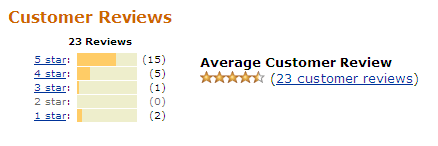
 Conventional websites such as those that provide news articles such as the BBC website that would have originally just distributed information processed by them have made adaptations to include user opinion and content. For example there is an option to send them your opinion on a news topic, which may appear in a later news article. For sports articles, people who may have watched a game of football can post a comment about what they thought of the match to the BBC and it could appear in the article about the game the next day. There are also options to share articles or products from sites on social networks such as Facebook and Twitter. Websites that sell products also encourage user opinion by offering the option to write a review about a product they sell allowing other customers to read before buying, star rating systems are also used on these websites - a prime example being Amazon.


 In conclusion, the internet has become a very different place where average users can become celebrities and opinions of normal people can be heard and discussed. Although there are downsides of spam, advertising and abusive users I think this change is extremely positive, helpful and inspiring.

Sunday, 6 February 2011

Explain, using specific examples, how the expansion of digital media has been an improvement for audiences.

 There are so many ways in which digital media has expanded over the last decade or so, opening up a whoe new world of access for the audiences of films. Although different forms of media have been developed and thereby perhaps have split up film-viewing audiences, certain expansions have been a certain improvement for audiences in order to move with the times. The emphasis being mainly on film access, film audiences can access films online (not only is this convenient, but opens up a global variety of other film genres to audiences) as well as on various other platforms. Accessing film online is something many people will take part in, it's possible to watch films both legally and illegally from all over the globe from one's computer screen. Specific examples being things such as SkyPlayer, although you must be registered with Sky to use it it usually provides the most recent of blockbuster films after they have been released on DVD. Other examples include online TV channel players such as 4OD and BBCiPlayer which allow audiences to view recently shown programmes or film from the TV channel on their computer.

Internet access of films not only provides convenience for audiences but also provide them with a whole host of film types they could not access before. Although such access creates niche or 'cult' audiences and may provide problems for blockbuster film industires, for audiences this is a great improvement. People with alternative film interests can find what they're looking for and not be limited by their national film industry & it's trends. There are many film genres from different cultures that have become a lot more popular thanks to this internet access, such as Japanese anime (a personal favourite of my own). Also kinds of 'cult' films are becoming a lot more popular and thus shown in cinemas attracting huge interest, even when they are low budget. In my opinion this is a great improvement, as people's preferences are not as heavily influenced by the high-budget films overloaded with CGI and with vortually no plot (namely Avatar).

Furthermore, advances in the platforms films can be viewed on is also a great improvement. So not only can audiences watch films on their TVs, at the cinema or online but on so many other things. These include various game consoles such as Sony PSP and PS3 as well as Microsoft's Xbox 360. Mobile phones are also geared up to deal with film streaming now. In addition, advances in the traditional methods of viewing films at home such as VHS are also great improvements. Although there's nothing like watching a video from the 90's, there is no doubt that DVD and BluRay discs are an extreme improvement in sound picture quality in home film viewing. Cable providers such as Sky and Virgin also have features available to customers that allow them to record and watch films from current TV so they can watch them at any time they want, they can also pause/rewind/fastforward live TV which is an extremely useful feature.

Tuesday, 1 February 2011

Narrative Theories

Propp
Propp came up with the theory that characters in a story take on single or multiple specific roles of narrative 'spheres of action' or functions. So in short, the character roles create the narrative. Propp came up with 7 character types usually found in a narrative (a character could adopt 1 or more of these roles); the Hero (restores narrative equilibrium by embarking on a quest), the Villain (creates the narrative destruction), the Donor (gives the Hero something to help store equlibrium), the Helper (aids the Hero), the Princess (most threatened by the villain, usually has to be saved), the Dispatcher (sends the Hero on their task) and the False Hero (appears to be good but turns out to be bad in the end).

Todorov
Todorov came up with 5 generic stages he thought would be found in a narrative, and tend to be found in most mainstream ones. These stages are as follows;
1. a state of equilibrium at the beginning
2. a disruption of this equilibrium by some action
3. a realisation that there has been a disruption
4. an attempt to repair this disruption
5. a restoration of the initial equilibrium

Barthes
Barthes came up with 5 codes which he thought were woven into any narrative. These 5 codes are as follows:
Enigma Code - Something the audience does not know.
Action Code - Something the audience knows and don't need explaining. (E.g. Packing a suitcase in a hurry connotes running away)
Semic Code - Using hints (E.g. Mansion, Sports car, Butler, Posh classical music) to connote certain concepts such as wealth.
Symbolic Code - A structure which organizes meaning such as through the use of binary opposites.
Referential Code - Looks at the audiences wider cultural knowledge, morality and ideology.

Levi-Strauss
Levi-Strauss saw narrative structures in terms of binary oppositions; sets of opposite values which reveal the structure of media texts. For example, Good & Evil, Earth & Space, Old & Young, Dark & Light, etc. He was not interested in the order events were arranged. Themes contain a variety of binary oppositions, such as sci-fi films may contain Earth & Space as well as Good & Evil and Humans & Aliens, etc.

Sunday, 30 January 2011

Converging a Game-Show

The game show I would choose to converge (if I could) is Robot Wars; the game show where contestants create their own robots and then throw them into battle with one another. There are many media formats that Robot Wars could be converged with; those of video games, iPhone apps, webcam/internet streams, internet competitions and perhaps betting.

Production

    Converging robot wars with various media formats other than television could lead to changes in production with the original programme. One of these changes maybe how contestants would gain the chance to appear on the show; instead of traditionally applying by post or phone call a competition could be created in which would-be contestants would have to compete in order to appear on the TV show. For example, an online multiplayer game could be made (in the theme of Robot Wars of course) in which people could customise & build virtual robots and then fight each other with them. When players would win matches they would gain points, those with the most points by a certain date would be those who could build their own real-life robot and fight with it on the programme. Further more, if webcam streaming would become a part of the show then it would need to be considered where the webcams could be placed during production. The most obvious ideas could be on the battling robots themselves, this way people on the internet could watch different aspects of the matches. If this happened, another element could be introduced – that of betting on matches. While watching live webcam streams spectators could bet online (perhaps with points they had earned on the online multiplayer game) which robot they thought would win the current match, or future ones.

Distribution

The aforementioned idea of webcam streaming links to distribution as it provides another format on which the television programme can be accessed & watched, and thus distributed to viewers. Depending on which channel Robot Wars would be broadcast on at the time, downloadable or stream-able episodes of the series could be available to the public on internet players such as 4 OnDemand and BBCiPlayer. DVD boxsets could also be sold.

Marketing

    In terms of marketing, as well as online multiplayer games, there could be a range of various other video games produced based upon Robot Wars that could be marketed to gain profit. DVD box-sets of the series’ could also be sold. Furthermore, the show & its merchandise would mainly be advertised on television as well as on social networking sites such as Facebook and Twitter to ensure that all audiences are reached. Also applications such as news feeds could be available for download to mobile phones to raise audience awareness of upcoming episodes and release of merchandise.

Technologies

    Assessing all that I have already mentioned, aside from all the conventional TV-show-making equipment, other technologies we would need to utilise would mainly be that of the internet and its many qualities (especially since the internet can be accessed not only from a computer, but also from mobile phones, PSPs and other handheld devices). Also, mobile phones and gaming systems are also being addressed if phone applications and video games are also to be produced. Thus, audiences can interact with the game show on all manner of formats, depending on their preference – the more formats the game show accesses the larger audience it reaches.

Wednesday, 15 December 2010

What is TV Drama?

   There are many things included in the genre of TV drama. In simple terms, TV drama is fictional action in narrative form. TV drama splits into many different sub-genres in modern broadcast, and it is important to understand how and why.

Examples of TV Drama; Wallander, Doctors, Made in Wales, Eastenders, Holby City, Doctor Who, Lip Service, Being Human, Sherlock, Casualty, The Vut, Middletown, Lennon Naked, Made in Wales. (Broadcast on BBC)

Examples of TV Drama mixed with another genre; CSI: Crime Scene Investigation, Heartbeat, Inspector Morse. Many of these are crime, detective or police dramas. The reason for this combination is because police shows and action often go hand in hand; therefore you get a police drama, this way it's action in real-life context.

Different kinds of TV Drama; Comedy Drama, Police Drama, Detective Drama, Medical Drama, Historical Drama, Political Drama, Romance Drama, Legal Drama, Sci-Fi Drama, Supernatural Drama, Military Drama, Children's Drama,


*Needs Finishing*

Thursday, 9 December 2010

Thriller Evaluation - Full Version

Here are the written pieces for questions 1-7 of my thriller evaluation.


Also, here are some annotated stills from our thriller in relation to Question 1. (They were too large to fit in to the text document).

Here and here .

The Finished Product!

Here's our finished edit of our thriller, 'S1'.

Sunday, 28 November 2010

Body of Lies

I
   This is my second full case study on Body of Lies. This is a crime/spy thriller based on a terrorist plot of planting bombs all over Europe. Three men work with and against each other in order to unfold this plot and track down the terrorists. It's basis is the novel written by David Ignatius; an american journalist and novelist also in association with The Washington Post (therefore it might be assumed that he's an established writer with wide experience, and perhaps capable of creating a commendable novel). His book was published only a year before this film was made, Warner Bros bought the rights in 2006 and altered the name of the book to be published in 2007 - the film was then released in 2008. The three men are played by Leonardo diCaprio (Roger Ferris), Russell Crowe (Ed Hoffman) and Mark Strong (Hani). With such big names involved in the film it can again be assumed that the makers had high hopes; the film was in fact nominated for two awards (London Critics Circle Film Award and Satellite Award). The film was directed by Ridley Scott and the film company primarily involved with the production was Warner Bros. The filming locations were Maryland, USA as well as various locations in Morocco. The film was rated R in America and 15 in the UK for violence, torture and strong language.

II
   As previously mentioned, this film was rated 15 in the UK for strong language and violence. Therefore in guideline terms this film is intended for anyone over the age of 15. However, age aside, because of the heavy political and terrorist complexity of the film in my opinion I would say this film is targeted at the politically interested and perhaps intelligent. Having not seen the entirety of this film myself and reading up on the plotline it appears that the story is quite complex. Therefore I would think that adults would find this film the most engaging and interesting as they would be the ones most 'savy' with politics and the like. However that isn't to say that younger people wouldn't enjoy this film, I would watch this film myself if I had the opportunity. Here is a review from IMDb.com put forward by a viewer that thought the film was quite impressive :

Engaging, intelligent
11 October 2008 | by jemps918 (Philippines) – See all my reviews
V. well-made; everyone from the cast and crew pulled their own weight in Body of Lies.

Director Ridley Scott's genius shines through what could have been another unpalatable, trite topic of the US' relations with the Middle East and terrorism. He expertly unravels the story of CIA operative Roger Ferris (Leonardo DiCaprio) who is assigned to flush out an evasive terrorist who is blowing up public places all over the world. Ferris is increasingly frustrated with his boss Ed Hoffman (Russell Crowe)'s impatience and double dealings, which more than once puts himself in jeopardy, challenges the trust he is trying to build with Jordanian leader Hani (Mark Strong) and his budding romance with the pretty Palestinian nurse Aisha (Golshifteh Farahani).

DiCaprio just keeps getting better and better as he is now more able to lose himself in a role and successfully shed the pretty. Crowe does well in an understated but dangerously quiet role as a Washington-based puppetmaster. The versatile Italian-Austrian Andy Garcia-lookalike Strong is fantastic as the powerful Hani, while Farahani's face lights up the screen and turns in a memorable performance as well.

The attention to detail in this movie is just awesome; the action sequences are not over the top but satisfactory enough to not lose the main storyline despite the complex thread of subplots. Overall, an engaging, intelligently-made film.


   From what this viewer has written it seems that this type of film is quite a popular one to be made, and therefore they are not always made well. But it seems that this film in particular is favourable to the public as is awarded a 7.1/10 on average on this particular website. It is understood that this viewer has picked up on the amount of effort put into this film in order to emphasise the possible reality of the situation. However, here is an extract of a review written by a person who thought the film wasn't so well made :

Is the movie over yet?, 19 October 2008
Author: PWNYCNY from United States

*** This review may contain spoilers ***
Maybe being a government bureaucrat is not the most glamorous way of making a living but it's still a way to make a living. However, after watching this movie, one may come away believing that every government bureaucrat is a lazy, bloated, conceited, paper pusher who lives exclusively to partake of his next lunch break. Not exactly a pretty picture, but this is the picture that the audience has to endure when watching what is nothing more than another tedious, noisy, overacted action movie. Just what the doctor ordered ... right? How many more of these movies has Hollywood made? One thousand? Two thousand? The formula for making these movies is so beaten into the dust that by now it should be completely unrecognizable. The locales change but the plots remain the same, and with the same shallow character development and the equally shallow acting as trained performers are asked to devolve into pseudo-cartoon characters and act accordingly. This movie seemed to run-on interminably. "When will this movie end?" I repeatedly thought to myself. Leonardo DiCaprio was totally unbelievable as a CIA operative, but what has to be one of the great gaffs of miscasting, an overweight Russell Crowe plays a CIA bureaucrat...

   This viewer seemed to think the film did conform too much to this kind of sub-genre and that it was too boring and repetative of other films that it was barely worth watching. Perhaps this viewer had seen too many politically based movies. Although this review seems quite severely negative, it can't be denied that the majority of viewers that posted on IMDb gave this film a positive review.

III

   In regards to technology, this film was released only 2 years ago and so modern technology has been apart of it's advertisment. Here is a link to the film's official website that contains the film's trailer and other various details towards the bottom of the page. As is viewable, the website looks very sleek and modern and although it does not contain many extras as might be usual to a website it has links to where you can now purchase the film on DVD and BluRay. So the website that was previously used to advertise the film's release and other details, is now used to advertise accessible purchasing of the film. There is also a link to Warner Bros Movie and DVD updates; further advertising the production companies products. There is also a Body of Lies page on the Warner Bros webiste found here which provides an interactive screen in which you can click to view descriptions of characters as well as watch the movie trailer. There are also features such as a photo gallery. The fact that this was available before the film was released meant consumers that were interested in the film were able to read up fully on characters, locations, etc. Therefore technology in the medium of the internet provided/provides a well-laiden website of features available to the public that may draw them in to watch and/or purchase said film. The trailers and cast interviews can also easily be found on websites such as YouTube. Website such as Google also provide features of looking up books, which in this case is relevant as Body of Lies was of course based on a book. Since info on the novel is in circulation, viewers can easily get linked up to the motion picture through this also.

IV
   As I have not watched the entire film, I have decided to analyse the first 3 minutes of Body of Lies. As the film begins we are confronted with an arabic man; the combination of his clothing and language lead us to the fact that he is obviously middle eastern. He points towards the camera as if he is speaking directly to the audience about his operation, the use of an unfamiliar language makes the audience feel as if they are intruding in on something they shouldn't be. And the gestures and speech given by this man threatens hostility and therefore a dangerous situation. Middle eastern style music is also played in the background to add to the atmosphere of unfamiliarity in the setting of "Manchester, England". We are then lead around a flat or house that is very dark and run down, we still hear the man talking in the background - his voice is distorted as if coming from a radio. The darkness of the shots give the setting a very dingy look, perhaps suggesting that not only is the area dark but the deeds going on within are dark also. We see evidence of intelligence amongst the inhabitants; one has a book laying on him (a religious one perhaps? Gathered from the previous reference to Islam, etc), chemicals and equipment are laid out and one man is wearing glasses. The aforementioned bombings (from the Arabic man in the beginning) lead us to think that perhaps these chemicals are associated with such acts; we can perhaps draw the conclusion then that these men are terrorists and that something thrilling is about to happen. All this is received by the viewer quickly and they are therefore absorbed into the plot very quickly as they are engaged. It is conventional of a thriller to primarily present a situation that is perhaps at first in need of some deduction, and therefore the viewer is drawn in straight away by using their brain to understand or work out what's going on.
   Moving on from the shots inside the house/flat we can see police attempting to infiltrate said house; confirming our suspicions on their activity. What I picked up the most from the this part was that the digetic sound of fences rattling, the milk bottles in the truck and the dog barking etc were all made to sound much louder than usual in a shot of this kind. The police footsteps etc were made very quiet, this high contrast of loud and quiet sound emphasises the stealth of the police. An explosion then follows as those inside the house hear the police regardless of how stealthy they were. The explosion is yet another loud noise that accesses the viewers ears as well as their eyes to keep them enthralled. To be presented with conventional characters such as police force members and potential terrorists conforms this film very much to the crime thriller sub genre. The dark, run-down setting makes us think that who ever inhabits this place must not care for appearances and in our kind of society people are very judgemental about these sorts of things, leading us to think that these inhabitants aren't quite usual inhabitant if their windows are smashed.

Click here for an annotated screenshot mentioned.
Note : The windows behind this character could suggest that light or good is behind him; in the sense that he is fighting for a good cause or in the sense that he has left good will behind.

V
   There is not much to be deduced in the way of social groups or women in the first 3 minutes of this film. However what can be commented on is the representation of ethnic minorities; in this case the muslim community in Europe. The fact that in the first 3 minutes of this film the only muslims shown are thought to be terrorists; this could send out a bad message. However, this is relevant to current and previous events that have happend globally in reality; muslims have been found to be suicide bombers, terrorists and the like. I think this film is simply a representation of this to emphasise effect. There is also a man shown who delivers milk to the door of the flat who is wearing a turban, another ethnic minority in the country of England. Not much can be concluded from his part in the film as he is only in it briefly, perhaps the fact that he is a milkman makes him seem unimportant and that his meant to be the representation. The rest of the people we see in the opening of Body of Lies are all disguised in police uniforms. Therefore it's difficult to draw any conclusion from who they represent. Also, no women are shown in this opening. Perhaps the film makers decided not to include women in the opening as the first few minutes of the film are filled with danger and violent acts - and women are perhaps not associated with this in the public eye. Therefore, with only men in the shots it gives a much more uneasy atmosphere. This sort of representation could also be taken to say that women are not or shouldn't be concerned with matters such as these, which is slightly derogatory. However, this analysis is only drawn from the first three minutes of the film so can't really be taken seriously until justified with evidence from the rest of the film.

Friday, 26 November 2010

Thriller Research: How it's influenced our thriller construction

 I've conducted a fair few pieces of research that I've posted on my blog, but I wouldn't say much of it would be worth anything if I hadn't used it to develop ideas for our own thriller project. So here's a post on the ways in which my research has influenced my ideas.

 This piece of research (click here) was conducted very early on during my AS media course and was quite important in our group's development of ideas. The information on composition allowed us to create shots that were in balance and appropriate to the atmosphere of the scene. There is a particular shot at the end of our opening in which Rhys (Jos) is to the right third of  the frame and is walking towards the camera, the view of the track in the wood in the background is in the rest of the frame and is then added to as the Lady in the Gas Mask appears on the track some distance behind Rhys. The rule of the thirds helped us to compose shots like these well resulting in clarity and balance of the shot - and in our satisfaction. The knowledge of digetic and non-digetic sound also helped us create the atmosphere we wanted in our opening. We decided to mute all of the digetic sound and only use non-digetic sound. We thought this technique would make the soundtrack seem more applicable to the feelings of the audience and make them feel like they were really there. In a way it depersonalises the characters on screen or makes them seem more far away, which could also make the viewer feel like they are pursuing/stalking them (also adds the convention of isloation..).

 The notes made from these thriller openings have contributed to our thinking of editing our thriller opening. I believe I made comments on all them regarding hue and darkness. Most of them had fairly dark frames with high contrast of small amounts of light and large amounts of dark. The hue was also often blue to give a sense of unwelcome and cold. We'll most likely follow these existing thriller examples in order to conform to thriller conventions and audience expectancy.

 My case study on Ginger Snaps didn't provide too much insight for me into our own thriller as it's a fairly different sub-genre. Although, there is a point in Ginger Snaps where the two main girls are attacked in the woods and our thriller opening sequence basicaly consists of Rhys being attacked in the woods. Therefore you could say we're using a classic basis for a sequence in a thriller, an example being in Ginger Snaps. The characters in Ginger Snaps also seem innocent but fairly liable to being attacked or victim to unfortunate circumstances. Such is the same for our main character.

 My analysis of The Coin Toss scene from No Country for Old Men was based on semiology, this let me understand the importance of objects and signs in thrillers. We used props such as the gas mask to invoke mystery and uncertainty about one of our characters. The trees on location also symbolised bars and hence entrapment of the main character.

 And of course the research into what a thriller actually is provided us with a general feel of film that we wanted to give to our own. By using all the different aspects of thriller conventions (locations, iconography, themes and plot lines) we have created our own version of a conventional psychological thriller.

Thursday, 25 November 2010

Feedback Session Results

 Today we screened our thriller opening to an audience of about 20+ people. We handed out 10 of our feedback sheets. A lot of people had a rough idea of what was going on in the opening, which is always positive. Good points made by the audience were things like camera shots/angles as well as the use of music. A favourite aspect of one viewer was the sense of isolation + desolation created by the setting and music. They also seemed to find the characters relatable and enjoyable, not many disliked the characters. From this we have gathered a lot of positive feedback overall, which is good as we ourselves are pleased with our edit so far.

 In our group we have already decided on certain things we still have to edit, and at what point in the opening we'll add in the credits, title, etc. We hoped to get more improvement points from our feedback sheets but not many people put down serious suggestions. Although we had already decided the majority of things we wanted to change, it would have been helpful to receive a wider view. One improvement that was put forward was not to spend too much time panning the woods at the beginning of the opening. This added to our own thoughts and therefore we have decided to add in credits at this point in the film.

 Overall, the feedback session was fun and fairly informative as we were able to look at other groups thrillers as well. It's good to know that our age group seem to have a positive opinion of our product when it isn't even finished yet.

Comment on Location

Original post on location can be found here.

 We had decided, when first planning our film, that our thriller opening was going to take place in a wood. This was the only location we ended up needing as all the scene was to be set there. We all had a few ideas of local areas that could be suitable, but when it came to 'going on location' we visited two of the ideas we though would be best. The first location was along Marriot's Way, Reepham in the wooded areas. Although we found a suitable crater in the wood for our sense of entrapment and intimidation, the area was very overgrown and difficult to get to and walk around in. Thus we dubbed this location a bit useless. However, our second location was Cawston Heath - another public area commonly used by dog walkers, etc - and this was a heavily wooded area but was more maintained and therefore easy to navigate. There was also a crater in this wood where we ended up filming most of our opening. The grouping and types of trees (as well as the weather and season) was suitable for the desired effect of our filming. When it comes to the final edit of our opening, we will probably make all the shots darker as many of them are fairly light. It would have been difficult to film at a darker point in the day without professional equipment (and as I discovered by working with another group -as an actress- one becomes very short on time when attempting to film when it's dark but not too dark).

 Woods are a part of popular thriller conventions of entrapment, a feeling of being lost and therefore isolated.
Here are some examples where woods have been used as locations in thriller films:
                                     
                                                          Dog Soldiers

Blair Witch Project                                                                                    Evil Dead

Wednesday, 24 November 2010

What is a thriller?

A small piece of research into what a thriller actually is...

What makes a thriller a thriller? What sorts of characters, settings, narratives? According to thefreedictionary.com this is the definition of a thriller :

thrill·er
n.
One that thrills, especially a sensational or suspenseful book, story, play, or movie.
Quite self explanatory.  
A film under the genre of 'thriller' does tend to scare, excite or of course thrill the audience to which it is shown. Sub-genres include that of Horror, Psychological, Science Fiction, Crime/Detective and sometimes 'Action Thriller' - all of which tend to invoke the above feelings or emotions. So it goes without saying that there are many, many films out there that belong to this widely spread genre. However, what are in fact the characteristics of a thriller?

Conventions/Plot
  There are many basic storylines or plots that act as guidelines for thriller films, and hence are thriller conventions. For example, a situation of a lone person or group of people that are found in an isolated area where there are not many other people around - isolation. The convention of isolation is widely used in thriller films, especially horror. Films such as 28 Days Later use this convention very well; the main character (played by Cillian Murphy) wakes up in a hospital with nobody around, when he goes out into the streets of London he still finds nobody. The effect of isolation makes the characters the audience are watching seem very vulnerable and helpless to whatever may 'come and get' them. Other popular conventions are that of voyeurism; being watched or followed. Sometimes the viewer is made to feel like they are looking in on the characters, or that they are unwelcome perhaps by using the technique of filming the shot behind bars or a fence. Other times the viewer is simply observing the characters being watched or followed by others. This sort of convention raises questions in the viewers mind immediately, such as : Why are they following/watching them? Are they going to capture them? What's going to happen? This kind of engagement is exactly what film makers want to happen, so that the viewer is absorbed into the thrill straight away. Yet another widely used part of plot/storylines is the 'red-herring'. This is when there is partiuclar emphasis put onto perhaps certain characters of the film, leading the viewer away from what is truly going on. Thus leading to plot twist in the long run. In our own thriller film, there are parts where the camera is panning up the body while violent flashbacks interupt the panning. The flashbacks (due to their violence) make it seem like the body on the ground could easily be a corpse, however our character then wakes up and therefore is in fact alive - this was our version of a red-herring.

Characters
 Popular groups of characters to be found in thriller films are often good guys and bad guys. This could be in the form of murder vs. victim, aliens vs. world, man vs. his mind, etc. There is often conflict. As a result, many a character found in thriller films are in fact murderers - either that of a human nature or otherwise. There are many examples of this, Mike Myers from Halloween (+sequels), The Creature from the Black Lagoon, Aliens from War of the Worlds, Jason from Friday 13th, etc. And of course there are victims to these killers, which in teen slasher films is often a mixed-gender group of teenagers (such as in Scream..). There are also the classic damsels in distress, and perhaps a person that is a victim of their own mind - as our character Rhys is. Of course not all thriller films go by this convention, as said above Crime/Detective films are also thrillers and these (as well as others) don't always play out with a murder and their vulnerable victim. There are also detectives, gangsters and other characters to consider - where conflict is a little less one sided in strength. There are of course many a different character in thriller films, but this is a brief and generic summary.

Iconography/Setting
 The items and settings are also a very important factor in making a thriller film what it is. Iconography would generally include things such as running water, bars/fences or perhaps street lamps. Running water is meant to be assoicated with death, as it may be draining away like a life or perhaps symbolises blood. Bars and fences give a sense of imprisonment and therefore isolation which links to the conventional atmosphere of a thriller. A type of setting that links into the idea of bars is that of a wood, as the trunks of trees with light shining through them could easily symbolise this - we in fact used this idea in our own thriller opening. And lastly street lamps, these (at night, of course) show only a small area of light in a frame which puts emphasis on the fact that there is a lot of darkness around. Plenty of darkness in a frame adds unease to the atmosphere, as no one can be sure what may be lying behind that darkness. Classic settings for thriller do heavily link to that which has already been mentioned - the feeling of isolation and imprisonment. For example locations such as woods, lakes, mansions and the like all have a daunting and creepy air about them - especially when it's night time. However usual locations are also used in thrillers, such as cities. Settings such as these I think are used in order to show that unusual and/or thrilling things can occur in a very ordinary and busy place. Psychological, crime or gangster films often take place in cities which seems to bring the madness closer to home; it makes the viewer feel like strange or violent things that happen within these films could easily happen in reality.

Music/Sound
 Music and sound (digetic+non-digetic) contirbute greatly to the suspense of a thriller. If you want the viewer to be anticipating an event in a film such as a Horror, it is easy with the clever addition of music. Often, the music and sound will go quiet with perhaps a high-pitched instrument in the background that keeps one on the edge. Following this could be the climax or shocking part of the scene shown in unison with strong and loud music not only thrilling the eyes but the ears as well. Music helps bring the atmosphere of the film directly to the viewer, so they feel as if they were in the film themselves. The classic bass part for the film Jaws will always be remembered by most.

 These are the factors I think help to make a thriller exactly what it is. And by conforming to these, film makers are giving audiences what they expect and love from thriller films. Therefore, we have taken great care in making sure we have considered and utilised the conventions of the thriller genre in our own thriller opening.

Screening Our Rough Edits

On thursday 25th November (tomorrow) we're going to screen our rough edit of our thriller to other media and college students. We hope to gain constructive criticism as well as some positive feedback from this session so we can make our final edit the best it can be. Results will be posted soon after :)

Here are the feedback questions that will be handed out to viewers:

What did you think was going on during the film?


What do you think the rest of the story might be?


What are your thoughts on the characters? (whether you liked them, your interpretation of them)


Do you think the music was appropriate for what was happening in the film?


What was your favourite aspect of the film?


What improvements do you think we could make to the film?

Comment on Storyboard & Shooting Schedule

The storyboard to our thriller & our shooting schedule can be found here on Becky's Blog.

 Regarding the storyboard, to being with we all had some input. Becky soon took over as the individual with the best drawing skills and idea of what the content of the opening was to be. However when it came to what would be contained in the shots of the flashbacks, we all helped come up with content (Jos/Rhys being hit with a rock, dragged, etc). We also decided it would be a good idea to neatly present the storyboard by scanning it and re-doing it in photoshop to improve clarity. Becky put a lot of thought into camera angles and used ideas from other thrillers such as Predators and The Book of Eli (similar to our panning of trees in shots 1-2 and the panning of the body).

 In comment of the shooting schedule and storyboard, we forgot to bring along our storyboard along with us the first time we went filming. Thus, we forgot to film some of the shots leaving us feeling like we didn't have enough footage to work with. As a result we planned to film not only on November 6th but on thursday 11th November when we had a double media lesson. However, it then was raining on this thursday so we had to delay filming until the following thursday, November 18th. On this day we remembered our storyboard and therefore were able to film all the remaining shots as well as re-film some parts we weren't satisfied with the first time round. Now all our filming is done and out of the way, and footage is currently being edited.

Sunday, 21 November 2010